
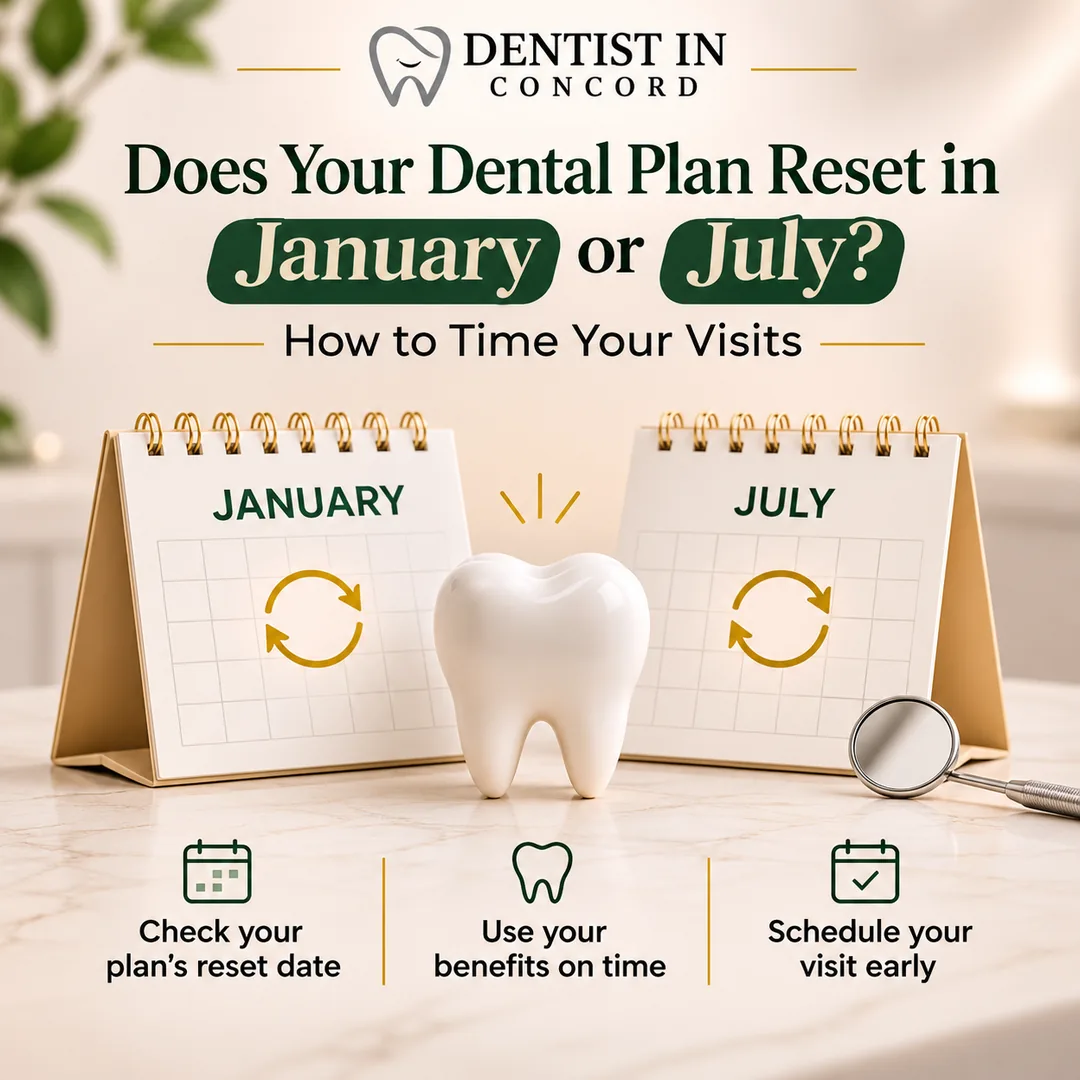
A patient may book a cleaning, then learn the dental plan reset last month. That can mean lost benefits and a surprise bill.
Many plans reset in January, but some reset in July. Knowing the date can help patients use preventive dental coverage and plan larger treatments. A quick check can save money.
Dental plans often follow specific timeframes for benefits. These periods can reset annually or mid-year, impacting how individuals approach their dental care.
A calendar-year plan renews benefits each January. Some plans use a mid-year cycle, such as one that renews in July. For example, a patient with a July reset may have benefits renew in summer, not January.
Unused benefits may be lost at the reset. Patients can avoid surprises by checking their plan’s benefit period before booking care.
In day-to-day scheduling, patients may encounter plans that reset in January or July.
| Reset date | Typical plan period |
|---|---|
| January | Calendar-year benefits renew |
| July | Mid-year reset |
Many people wonder when their dental plan resets. They can easily check with their insurance provider to get accurate information.
A call can confirm whether a plan renews in January, July, or another month. The patient can also ask whether a planned service has a waiting period.
After checking with the insurance provider, reviewing plan documents becomes crucial. This step helps patients understand their coverage fully.
Managing dental benefits requires careful consideration, especially regarding getting the most from available resources ahead of reset dates.
Dental plan reset dates play a crucial role in getting the most from your benefits. Missing these dates can lead to lost opportunities for care and increased out-of-pocket costs.
Patients can make the most of their dental benefits by planning visits around reset dates. Many plans renew each January, leading to lost benefits if not utilized before then. Some patients overlook their coverage and end up wasting valuable services.
Scheduling preventive care like cleanings in December ensures no financial waste occurs. Major treatments, however, require careful timing; procedures such as crowns or implants may need more lead time due to lab work. Checking remaining benefits helps avoid loss and keeps dental care affordable.
Unused dental benefits can vanish if patients do not act quickly. Many plans reset at the end of the calendar year, meaning funds could disappear come January. Others follow a mid-year schedule, resetting in July instead. Patients should check their plan details sooner rather than later to avoid missing out.
Scheduling cleanings and fillings in December is often still possible before a plan resets. Major procedures like crowns may take longer due to lab work and scheduling; thus, timing matters more than dates on the calendar. Reviewing remaining benefits helps ensure coverage does not go to waste.
Timing your dental visits can save money and improve your health. Schedule major treatments right before reset dates to maximize benefits, and plan preventive care early in the year.
Scheduling major dental treatments requires careful thought. Many patients need to consider their insurance plan's reset dates. Plans often renew on January 1, but some reset in July.
If a patient has significant work like crowns or implants planned, timing becomes vital. These procedures may require lab work and longer appointments, which don’t fit nicely into the last-minute rush before a reset.
Reviewing remaining benefits also helps avoid losing coverage at year's end. Patients should schedule visits early in December if they need cleanings, as these are generally easier to fit in before a plan resets.
Major treatments might demand more foresight due to waiting periods or specific service limitations within plans. Understanding all aspects of one’s benefits allows for smarter scheduling decisions down the line.
Planning visits for preventive care matters. Patients benefit from scheduling cleanings and checkups before their dental plan resets. The end of December often presents an ideal time to use any remaining benefits. If someone has not utilized their coverage, those unused benefits could disappear after the reset.
Crowns and implants usually take more time due to lab work, making it wise to book these treatments well in advance. Verifying available benefits helps individuals avoid losing out on necessary services before the new year begins. Attention to these details ensures they maximize coverage effectively while maintaining optimal oral health.
Common dental services often hinge on reset dates. Cleanings and exams usually fall under the annual or mid-year limit, while major procedures like crowns and root canals can break your bank if timed poorly.
Cleanings and exams play a vital role in dental health. Many patients schedule these services before their plan resets at the end of the year. They often overlook how easily they can lose unused benefits if they wait too long. Regular cleanings help prevent cavities and gum disease, making them worthwhile to fit into one’s calendar.
Patients should check their insurance policy for coverage details. Cleanings usually remain covered right up until the reset date. With plans resetting annually or mid-year, understanding when to book appointments becomes crucial for maximizing those benefits. Consistent care helps maintain oral health and ensures a brighter smile down the road.
Crowns and root canals often require more planning than routine visits. Many people need these treatments due to decay or damage. Timing these procedures around dental plan resets is crucial.
Unused benefits may disappear if patients wait too long before the reset date approaches. Patients should check how much coverage remains for major work, especially if they have plans that reset in January or July.
Scheduling crowns can take extra time due to lab work involved. Implants also need careful timing since they are more complex than typical cleanings or fillings. A patient recently learned this lesson firsthand when their dentist informed them about a busy December schedule.
They quickly reviewed their insurance benefits and planned ahead; waiting could mean losing coverage entirely. Keeping an eye on remaining benefits helps avoid unexpected costs later on, making preemptive care smart financial sense.
Discuss treatment plans with the dentist. Open communication can help align treatments with your benefits. Setting reminders might also prove helpful to keep track of expiration dates. This way, patients can avoid missing out on valuable coverage.
Patients should talk to their dentist about coverage and treatment options. Knowing what services their plan covers helps patients avoid surprises. Some dental plans postpone coverage for certain treatments, so checking details is essential. A patient may be enthusiastic to begin on crowns or implants, but these often require more time due to lab work.
Reviewing remaining benefits before the reset date can help optimize coverage. Patients may have cleanings scheduled in December that count towards the current year’s benefits. They should also consider setting reminders for benefit expiration. This practice ensures they don’t miss out on valued dental services as deadlines approach.
Setting reminders helps avoid losing benefits. Many dental plans reset at the end of the year. Unused coverage may disappear if patients miss their deadlines. Mark dates on calendars or set phone alerts for upcoming expirations.
With a busy schedule, it is easy to forget these details. Tracking benefits ensures that hard-earned money does not go to waste. Reviewing remaining coverage before deadlines can maximize what patients receive from their plans. A proactive approach means happier visits and healthier smiles in the end!
It depends on your plan. Many plans follow the calendar year and reset in January. Some employer plans use a different benefit year, such as July to June. Check your plan documents or call your insurer.
Look for “benefit year” in your plan documents or online account. You can also ask your insurer or employer. Confirm the date before booking care, so your benefits do not catch you by surprise.
Your annual maximum and deductible may reset when your benefit year begins. If you need several treatments, ask your dentist whether you can schedule some before the reset and others after. This may help you use benefits from both years.
Not always. Preventive care may have little or no out-of-pocket cost, and delaying treatment can make a small problem worse. Check your coverage, network rules, and any waiting period. Then make a plan with your dentist.
Tell us a little about what you need — we'll be in touch shortly.
2460 Wonder Drive Northeast C, Kannapolis, NC 28083, United States

Hi! I'm Tooth fairy! Your AI Assistant Ask me anything