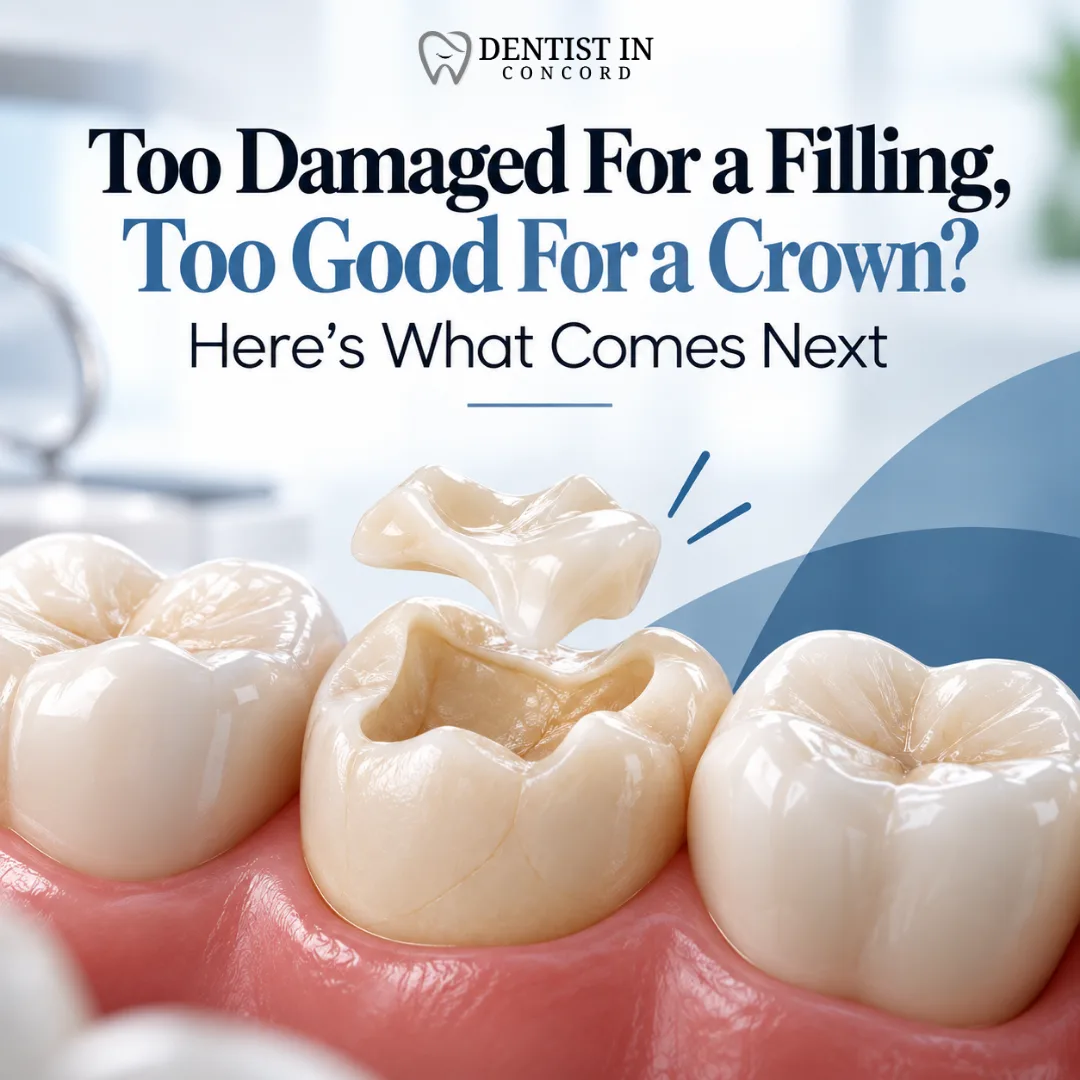
Many people feel stuck when a tooth is too damaged for a filling, but not bad enough for a crown. They feel pain or odd sensitivity. They worry about losing tooth structure. They want a fix that lasts and looks good.
One fact helps clear the fog, inlay-onlay-restorations sit between fillings and crowns. Inlays and onlays are stronger than fillings. They save more teeth than a crown. This piece will show when to pick an inlay or onlay, how the dentist fits one, and how to care for it.
Inlays and onlays act as a middle ground between a filling and a crown. A dentist who has placed dozens of inlays recalls choosing them when a tooth had more decay or damage than a filling could fix, but did not need a full crown.
Inlays sit inside the chewing surface. Onlays cover one or more cusps. They give more strength than a filling and protect against further tooth decay.
Patients often choose these restoration options after persistent pain or tooth sensitivity signals trouble. A dentist notes visible cracks, chips, or dark edges often mean a current restoration needs replacement.
Teeth with many past fillings, or those weakened after a root canal, may still need a crown instead. These filling alternatives need more work to place, but they save more natural teeth than a crown.
A dentist will pick an inlay when a tooth sits between a small filling and a crown. Inlays suit teeth that are too damaged for a filling but too good for a crown, as the headline says.
The writer once watched a patient with visible cracks and dark edges get an inlay after persistent sensitivity. Studies and practice show fillings fix small cavities and cracks, while crowns come in when damage grows larger or when a tooth has had many fillings.
Inlays prove sturdier than fillings, yet they need more dental work to place. A tooth that hurts despite treatment, or shows chips on a restoration, often benefits from an inlay. A tooth weakened by root canal treatment may still need a crown, but a less damaged tooth can get an inlay instead.
An onlay stands out as an excellent choice for larger dental repairs. This restoration works well when a filling simply won’t suffice. For example, if a tooth has significant decay or damage that goes beyond what a filling can handle, an onlay provides the strength needed without covering the entire tooth like a crown would.
Onlays also prove useful for teeth with multiple fillings. When several fillings weaken a tooth's structure, opting for an onlay can restore its function and appearance effectively.
Anyone experiencing persistent sensitivity in their teeth should consider consulting their dentist about this treatment option. An onlay addresses the immediate concern while also supporting long-term oral health with durable material choices like porcelain or composite resin.
Moving from the choices between inlays and onlays, materials play a crucial role in their effectiveness. Dentists primarily use porcelain, resin composite, or gold for these restorations.
Porcelain matches the natural tooth color well; it gives an aesthetic finish that people love. Resin composites bond firmly to teeth and can be colored to blend seamlessly. Gold provides durability but lacks cosmetic appeal.
In some cases, patients may have had fillings already due to tooth decay or damage. They might need stronger solutions like inlays when fillings won't suffice anymore. Inlays offer strength and improve oral health by protecting weaker areas of the tooth structure effectively.
It's vital to consider each material's pros and cons based on individual dental needs before deciding on treatment options.
The process of placing inlays and onlays involves two main steps. First, the dentist prepares the tooth and takes an impression for a perfect fit. Then, they bond the inlay or onlay to the tooth with care.
Preparing for dental inlays and onlays involves a few important steps. Patients should feel ready as their dentist guides them through the process.
This preparation lays the groundwork for effective dental restoration and provides essential support for a healthy smile moving forward.
Placement and bonding is a crucial part of the inlay and onlay process. It ensures that these restorations fit well and provide lasting support.
Taking care of inlays and onlays is essential for maintaining oral health. These restorations need proper attention to last a long time.
If your tooth is too damaged for a filling, your dentist may recommend other options, like an inlay or onlay. These are custom-made restorations that fit perfectly over the damaged area.
Your dentist will assess the extent of damage and overall tooth health. They might use X-rays to get a clear picture and suggest the best solution based on their findings.
It’s best not to delay treatment. Waiting can lead to more problems, including pain or infection. If you’re uncertain, talk with your dentist; they can guide you through your choices.
Yes, leaving it untreated can cause further decay or even loss of the tooth altogether. It may also affect nearby teeth and lead to more complex dental issues down the road.
Tell us a little about what you need — we'll be in touch shortly.
2460 Wonder Drive Northeast C, Kannapolis, NC 28083, United States

Hi! I'm Tooth fairy! Your AI Assistant Ask me anything