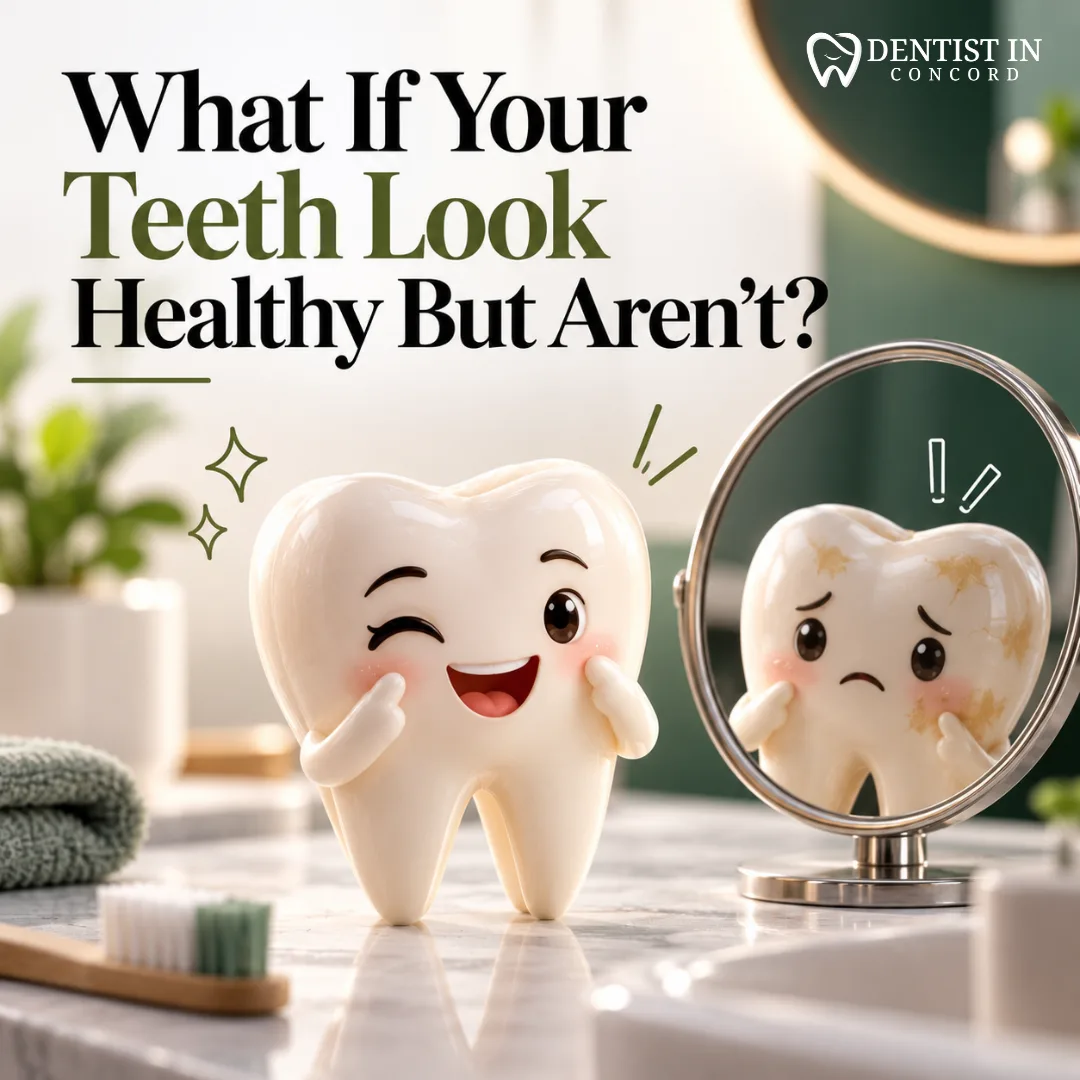
Many people smile and think their teeth look fine. They see bright whites and assume no problem.
Teeth can look bright while hiding decay or gum disease beneath the surface. Regular Dental-exams-and-cleanings catch these issues early. Here you will know the signs to watch, common hidden problems, and simple steps to protect oral health.
Teeth can look great but still hide problems. Some signs, like sudden sensitivity or persistent bad breath, could signal trouble beneath the surface.
A dentist once examined a patient whose smile looked flawless, yet X-rays revealed cavities under the enamel. Gums play a big role in how a smile looks; healthy gum tissue should appear pink.
Highly acidic drinks and foods can wear away enamel through chemical attack, and plaque buildup hides in grooves and between teeth. A dental exam and professional cleaning catch many hidden issues, including decay that shows only on X-rays.
Cases show bright front teeth can mask enamel erosion or decay on other surfaces. Low-calorie diets can erode collagen fibers that hold teeth, and hard foods like ice or popcorn seeds can cause micro fractures.
Regular checkups help spot subtle changes before they become serious problems. Dentists advise cavity prevention with good hygiene, a balanced nutritional diet, and avoiding harsh foods.
Gums often show the first signs of trouble. Red, puffy gum tissue signals inflammation and early gum disease. She noticed bleeding while brushing and her smile still looked bright and white.
Plaque buildup can hide below the surface, so a tooth may look intact while decay or infection grows beneath.
Acidic foods and drinks can wear enamel through chemical attack, and hard foods like ice or hard candies can chip or erode teeth. Low-calorie diets can cause collagen erosion, which weakens the fibers that hold teeth in place.
A regular dental exam catches these subtle changes early, and professional cleaning, good hygiene, and proper nutrients help reverse mild inflammation.
After gum inflammation comes another concern, enamel erosion can hide behind a bright smile. Acidic foods and drinks wear away enamel through chemical attack, not just bacteria. Hard foods like ice, hard candies, and uncooked popcorn seeds chip and thin enamel, so dentists advise avoiding them. Teeth may look white from the front while other surfaces show enamel wear or decay.
Healthy gums affect how a smile looks, and pink gum tissue helps teeth shine. Low-calorie diets can erode collagen, which weakens the fibers that hold teeth in place. A tooth can hide decay beneath a clean surface, so regular dental exams catch subtle changes before they become serious.
Good oral hygiene, proper nutrients, and routine professional cleaning cut plaque buildup and help prevent cavity development.
Regular dental exams play a crucial role in maintaining oral health. Many people may think their teeth look great, but issues can lurk beneath the surface. A dental checkup helps identify hidden problems like cavities or gum disease before they escalate.
Healthy gums contribute significantly to an attractive smile, yet red or puffy gums can ruin that illusion. Dentists look for early signs of gum disease and enamel erosion during these visits.
Professionals also spot subtle changes in dental health that individuals might overlook. For instance, a tooth may appear perfect from the front while hiding decay on another side.
Additionally, hard foods like ice and uncooked popcorn seeds can erode enamel over time; dentists provide guidance to avoid such habits for better long-term dental care. Regular checkups empower people to take charge of their oral hygiene practices and maintain true oral health without surprises later on.
Many dental issues quietly lurk beneath the surface. Early-stage gum disease often hides without noticeable symptoms. Cracks or micro fractures can also go unseen, leaving teeth vulnerable to decay.
Regular checkups help catch these problems before they worsen. Don't wait for pain; keep an eye on your oral health and stay proactive!
Early-stage gum disease often hides beneath the surface despite a bright smile. Gums may look fine, but symptoms like redness or puffiness signal trouble. Healthy gums should appear pink and firm.
If they look red or swollen, it's time for concern. Without treatment, this condition can worsen and lead to serious issues.
Tooth decay is another hidden danger that may lurk beneath seemingly perfect teeth. A person might flash a white grin while enamel erosion quietly takes place on other surfaces. Busy lifestyles often mean dental exams are skipped; however, regular checkups help spot these subtle changes early on. Waiting too long could result in more complicated problems down the road.
Micro fractures or cracks can hide under the surface of seemingly healthy teeth. They often escape notice until they become serious issues. Bright white teeth may conceal decay or gum disease lurking beneath.
Even a tooth that looks perfect from the front might show signs of wear on another side. Regular dental exams help uncover these hidden problems before they worsen.
Hard foods like ice and hard candies can contribute to enamel erosion. These fractures weaken teeth, making them more susceptible to damage over time. Healthy gums play a crucial role in overall appearance; even bright teeth lose their shine next to red or puffy gums.
Maintaining awareness of oral hygiene helps prevent further deterioration and supports stronger dental health overall.
Maintaining true oral health requires consistent effort and smart choices. A few preventive measures can help keep teeth and gums in great shape.
Oral health significantly impacts overall well-being. Healthy gums play a big role in how a smile looks. People often focus on having white teeth, but red or puffy gums can ruin that bright image. Gums should appear pink; if they don’t, that could signal trouble below the surface.
Hidden issues often lurk under those pearly whites. A tooth may look perfect from the front while decay silently eats away at its structure in the back. Acidic foods and low-calorie diets can harm teeth and affect gum tissue too.
Regular dental exams catch these problems early, stopping small issues from turning into serious conditions like gum disease or cavities. Good oral hygiene practices help keep plaque build-up at bay and maintain total dental health for lasting smiles.
Teeth can appear bright and clean while hiding problems like decay or gum disease. Regular check-ups are essential to spot these hidden issues before they worsen.
Look for signs like sensitivity, bleeding gums, or persistent bad breath. These symptoms may indicate underlying health concerns that need attention.
A dentist has the tools and expertise to detect problems you might miss at home. They can catch issues early when treatment is easier and less costly.
If you have concerns, don’t hesitate to reach out to your dentist right away. Getting a professional opinion will ease your mind and help keep your smile in top shape.
Tell us a little about what you need — we'll be in touch shortly.
2460 Wonder Drive Northeast C, Kannapolis, NC 28083, United States
Hi! I'm Tooth fairy! Your AI Assistant Ask me anything