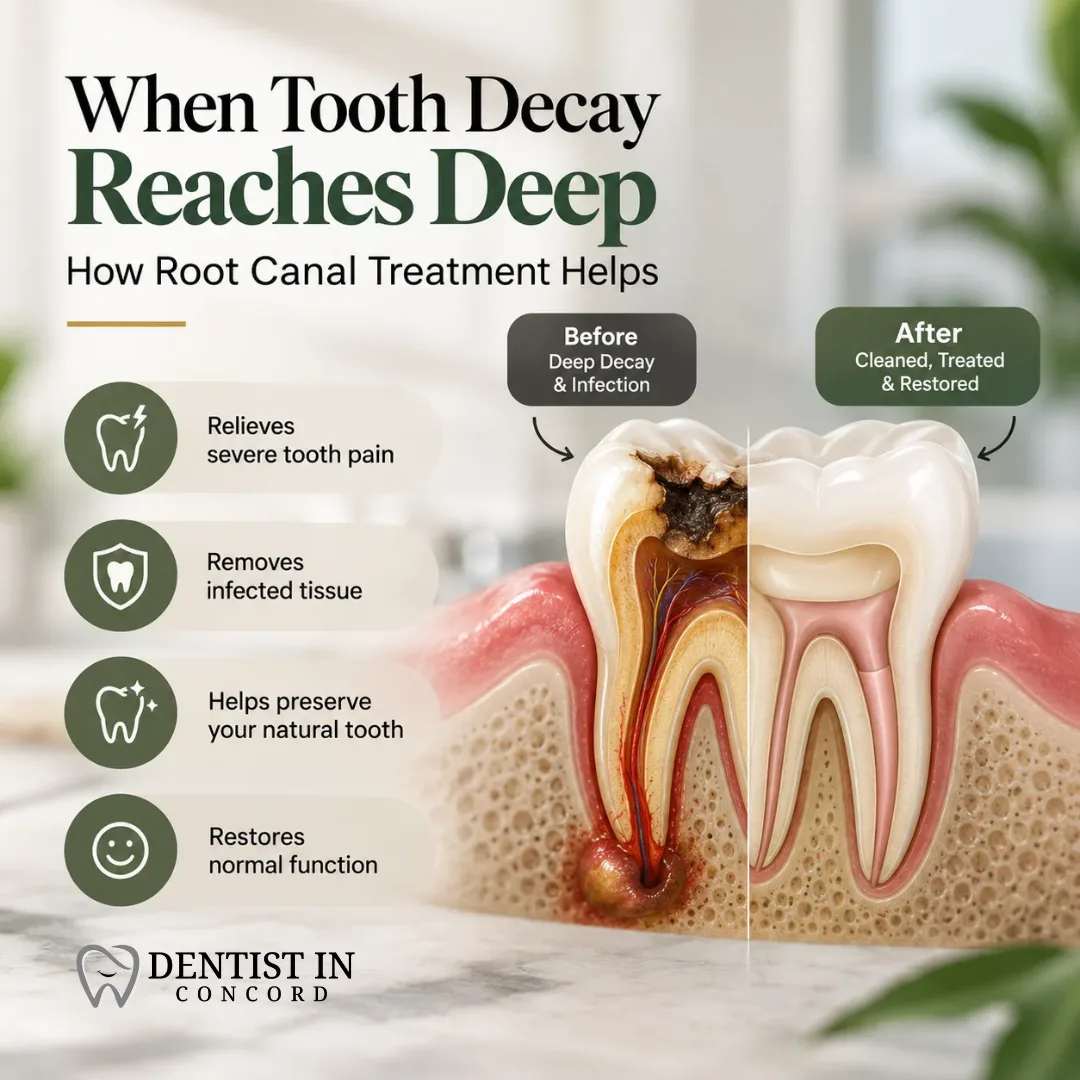
Many people wake to a sharp toothache and fear the worst. They want quick pain relief and a way to keep the tooth. Dental anxiety is real, and the idea of a dental procedure can feel scary.
Root Canal Treatment begins with an X-ray to map the root canals and spot any bone infection. The treatment then removes infected pulp, cleans the canals, and seals the tooth. It works like fixing a leaky pipe, stopping the infection and saving the tooth.
Deep tooth decay can reach the pulp and cause sharp pain. A dentist uses an X-ray to check root shape and look for bone infection.
Root canal treatment targets the infected pulp deep inside a tooth. First, the dentist removes the damaged pulp carefully. Then, they clean and disinfect the empty space before sealing it up tight to prevent future issues.
The dentist starts with an X-ray to map the root canals and check bone for signs of infection. They remove infected or inflamed pulp tissue from inside the tooth. This step stops bacteria that cause tooth infection and the severe pain linked to deep tooth decay. The procedure then disinfects the root canal to eliminate lingering infection.
After cleaning, the clinician seals and closes the canals to prevent future infection. This process saves the tooth by removing infection and strengthening remaining tooth structure.
Patients get fast pain relief as the source of infection or inflammation stops causing symptoms. The treatment restores function and preserves the natural tooth as an alternative to extraction.
After removing infected or inflamed pulp, clinicians move to clean and seal the tooth. This step uses X-ray images, files, and disinfectants to finish the job.
Root canal treatment offers significant advantages for oral health. It stops tooth pain and prevents further decay, preserving natural teeth for years to come.
Root canal treatment plays a key role in preventing tooth loss. This dental procedure removes infected or inflamed pulp tissue from the tooth, addressing deep decay that causes severe pain and infection.
After cleaning out the pulp, the dentist disinfects and seals the root canals to block future infections. This step protects the tooth from further damage.
Saving a natural tooth is always better than extraction. When dentists perform root canal treatments, they help preserve and restore teeth effectively. These procedures eliminate painful symptoms caused by infected roots while strengthening remaining structures. This approach helps maintain oral health and prevents more complex dental problems down the road.
Pain often becomes unbearable when tooth decay reaches the pulp. The infected pulp causes serious discomfort and can lead to infection spreading. Root canal treatment provides much-needed relief by addressing the source of that pain.
During this procedure, dentists clean out the inflamed tissue from inside the tooth, removing any bacteria that contributes to infection. This step helps eliminate painful symptoms quickly.
The disinfection process follows pulp removal; it ensures no harmful bacteria remain in the root canal system. After cleaning, dentists seal up the area, preventing future infections.
Patients often experience immediate pain relief after treatment. They regain their ability to eat and speak comfortably again. Ultimately, root canals assist in alleviating suffering and also protect oral health by preserving natural teeth rather than resorting to extraction.
A root canal treatment is a dental procedure that removes infected tissue from deep inside the tooth. This helps save the tooth and relieve pain caused by decay.
You might need a root canal if you feel severe toothache, notice swelling in your gums, or see dark spots on your teeth. These signs often mean decay has reached deep into the tooth.
Many people worry about pain during a root canal, but modern techniques make it much easier than before. Dentists use anesthesia to numb the area; most patients report feeling little to no discomfort.
After your treatment, your dentist will place a crown or filling on the tooth to protect it. You may experience some soreness for a few days, but this usually goes away quickly as healing starts.
Tell us a little about what you need — we'll be in touch shortly.
2460 Wonder Drive Northeast C, Kannapolis, NC 28083, United States

Hi! I'm Tooth fairy! Your AI Assistant Ask me anything