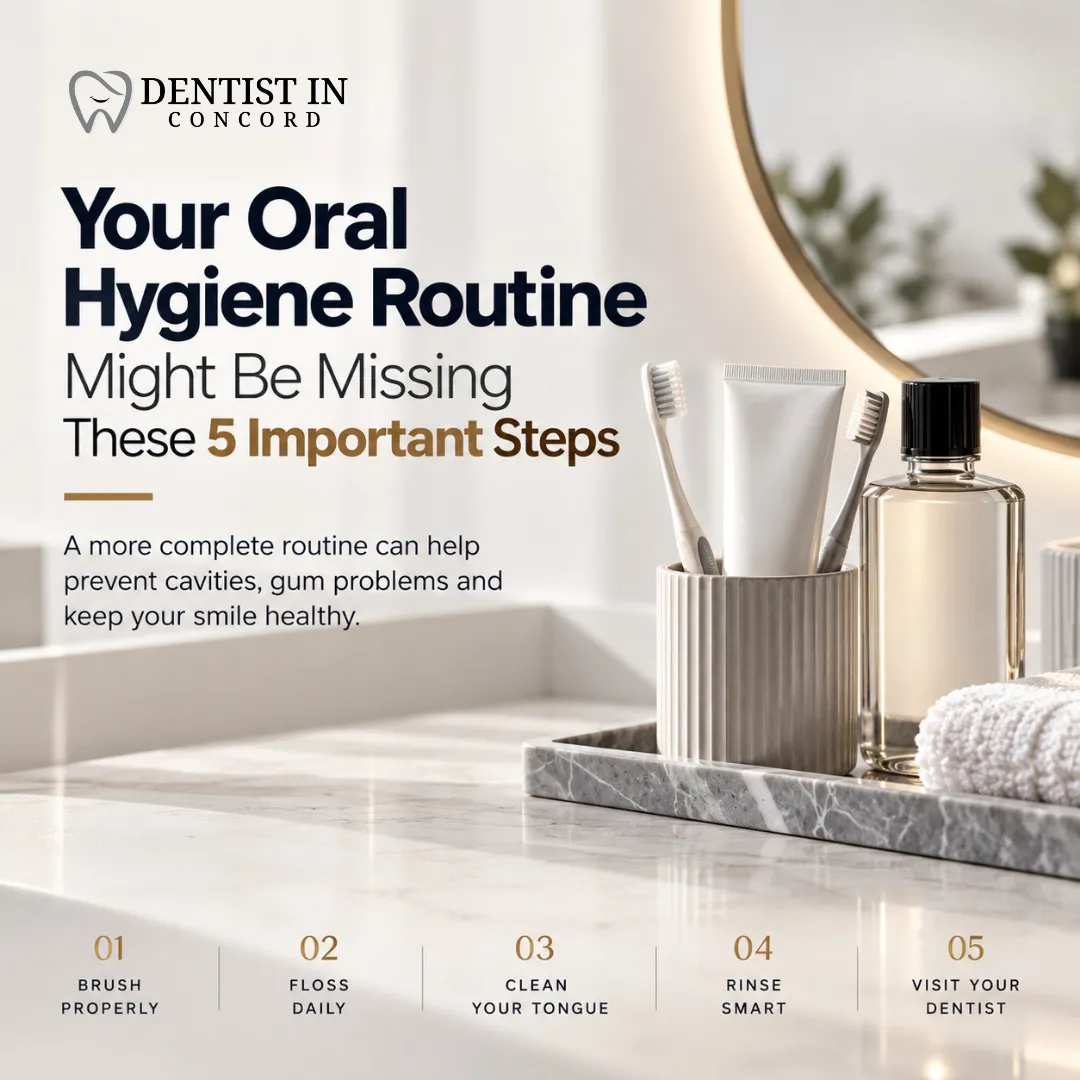
Many people brush each day and still deal with bad breath, bleeding gums, or tooth pain. They think a quick scrub with a toothbrush fixes it. It often does not. The routine can miss spots that lead to cavities and gum disease.
One fact helps explain this. Flossing removes plaque from between teeth where a brush cannot reach. Here you will know about clear steps for a complete oral hygiene routine, brushing, flossing, tongue cleaning, mouthwash, and more.
It will also share simple tips on toothbrush choice, toothpaste, plaque removal, gum health, dental care, checkups, nutrition, and when to see a dentist.
A complete oral hygiene routine includes several key practices. These steps help individuals maintain healthy teeth and gums while preventing cavities and plaque buildup.
Proper brushing techniques play a vital role in maintaining oral health. A toothbrush should have soft bristles to avoid damaging the gums. Users must hold the brush at a 45-degree angle against their teeth. This angle helps effectively remove plaque from both teeth and gum lines.
Brushing for two minutes, twice a day, ensures thorough cleaning. People should use gentle circular motions instead of back-and-forth strokes. Applying too much pressure can harm enamel and irritate gums.
Make sure to replace the toothbrush every three to four months for optimal performance. Toothpaste with fluoride enhances cavity protection while supporting gum health during brushing sessions.
Effective flossing plays a crucial role in maintaining oral health. It removes plaque and food particles stuck between teeth, where toothbrushes can’t reach. Daily flossing helps prevent gum disease and cavities. Many people neglect this step, but it is essential for strong gum health.
To start, use about 18 inches of dental floss. Wrap the ends around your fingers for better control. Slide the floss gently between your teeth; avoid snapping it down hard to protect your gums.
Curve the floss around each tooth in a C shape and move it up and down to clean effectively. Regularly incorporating effective flossing into an oral care routine will greatly improve overall dental hygiene.
Thorough tongue cleaning plays a key role in maintaining oral hygiene. The tongue can harbor bacteria and food particles, which contribute to bad breath and plaque buildup. Using a tongue scraper or the back of a toothbrush effectively removes these unwanted substances. This simple step enhances overall mouth freshness and promotes better gum health.
Incorporating thorough tongue cleaning into the daily routine helps improve oral health. Regularly addressing this part of dental care ensures that individuals achieve optimal results from their brushing and flossing efforts. Smart rinsing habits further boost effectiveness in keeping the mouth clean and fresh.
Smart rinsing habits play a key role in oral hygiene. Using mouthwash effectively can boost gum health and enhance plaque removal. It helps to eliminate bacteria that brushing alone may miss. Swishing it around for the recommended time ensures that all areas of the mouth receive treatment.
People often overlook the importance of this step in their routine. They might think water is enough, but mouthwash offers added benefits. Regular use of an antimicrobial rinse can provide extra protection against cavities and gum disease.
Building these smart rinsing habits will lead to better overall oral health while paving the way for regular dental visits.
Regular dental visits play a crucial role in maintaining oral health. Dentists detect problems early. They check for cavities, gum disease, and plaque buildup during these appointments.
Routine cleanings help remove tartar that brushing misses. A thorough examination can uncover hidden issues before they worsen.
Patients often feel relieved after a professional cleaning because their mouths feel fresher and cleaner. Regular checkups contribute to healthy gums and teeth. These visits also provide an opportunity for dentists to offer personalized advice on improving one's oral hygiene routine.
Following expert guidance maximizes the effectiveness of brushing, flossing, and rinsing habits.
To maximize the results of an oral care routine, individuals should focus on each step. Brushing twice a day is crucial for effective plaque removal. Use fluoride toothpaste to strengthen teeth and prevent decay.
Flossing daily helps clean between teeth where toothbrushes can miss food particles and plaque. Tongue cleaning is often overlooked but important for fresh breath and overall gum health. Many people benefit from rinsing with an antibacterial mouthwash after brushing and flossing; this further reduces bacteria in the mouth.
Regular dental visits play a vital role in maintaining oral health; these checkups help catch problems early before they become serious issues.
Use an electric toothbrush, floss daily with waxed floss, rinse with fluoride mouthwash, brush with fluoride toothpaste, and plan regular dental checkups. Add a balanced diet to support oral health and gum health.
An electric toothbrush removes more plaque than a manual brush. It cleans along the gum line and helps prevent gum disease. This boosts overall oral hygiene.
Flossing cleans between teeth where the brush cannot reach. It stops plaque build up and helps gum health. It protects your oral health.
Yes. Fluoride mouthwash and fluoride toothpaste reduce cavities and aid plaque removal. They work with your toothbrush and floss to keep good hygiene.
See dental care for checkups every six months or as your dentist advises. Regular checkups catch problems early. Keep a steady routine and eat a balanced diet for lasting oral health.
Tell us a little about what you need — we'll be in touch shortly.
2460 Wonder Drive Northeast C, Kannapolis, NC 28083, United States
Hi! I'm Tooth fairy! Your AI Assistant Ask me anything